


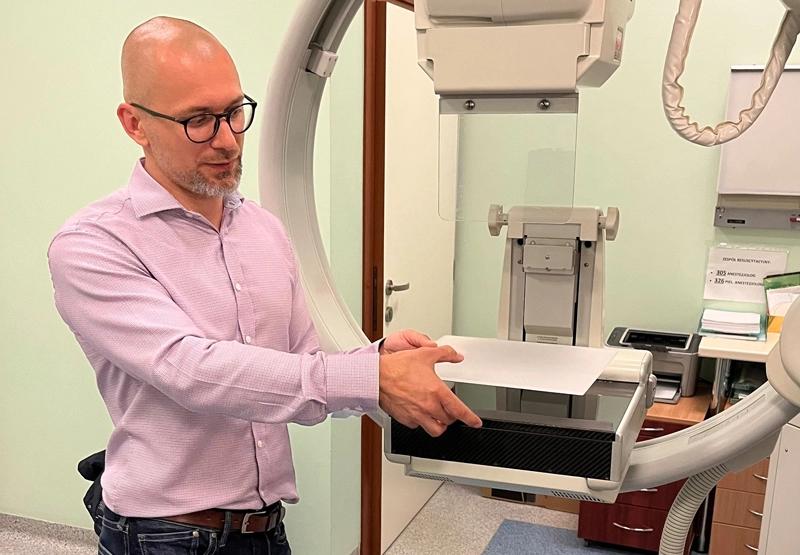
When performing quality assurance (QA) in mammography, both breast equivalent (BR) plates and PMMA (polymethyl methacrylate) plates are commonly used for different purposes. Each type of plate serves specific QA needs based on their properties and applications. Here's five reasons why you might choose BR plates over PMMA plates for certain aspects of mammography quality assurance:
Breast equivalent (BR) plates are designed to mimic the attenuation and composition of real breast tissue. They are made using a mixture of materials that closely approximates the radiological properties of breast tissue, including glandular and adipose components.
PMMA plates, on the other hand, are often used as a standard phantom material in mammography QA. However, they do not accurately replicate the complex attenuation characteristics of breast tissue.
BR plates provide a more accurate representation of breast tissue in terms of X-ray attenuation, allowing for more realistic image quality assessments. When evaluating image quality, using BR plates can provide insights into how imaging systems perform when imaging actual breast tissue.
PMMA plates are typically used to assess basic parameters like image contrast, spatial resolution, and exposure. They are less suitable for evaluating the performance of mammography systems in terms of tissue-specific image quality.
BR plates are useful for simulating various clinical scenarios involving breast tissue, such as masses, calcifications, and other abnormalities. They offer a more accurate representation of the challenges that radiologists encounter when interpreting mammograms.
PMMA plates are primarily used for simpler quality assurance tests that do not involve the complexities of breast tissue simulation.
BR plates allow for a more comprehensive evaluation of imaging protocols since they replicate the X-ray interaction with breast tissue more accurately. QA tests performed with BR plates can help optimize exposure parameters for various breast compositions.
PMMA plates may be used to assess the basic performance of the mammography system, such as assessing tube output and dose, without considering the nuances of breast tissue interaction.
Regulatory standards in mammography often recommend using breast-equivalent materials for certain QA tests to ensure that imaging systems are providing accurate and reliable results for breast tissue.
While PMMA plates have their place in QA, especially for assessing certain technical parameters, BR plates are better suited for meeting specific standards that emphasize the importance of tissue equivalence.
BR plates are chosen over PMMA plates for mammography quality assurance when a more realistic simulation of breast tissue and its interaction with X-rays is required. Using BR plates can lead to a more accurate assessment of image quality and system performance in clinical scenarios, helping to ensure that mammography systems deliver high-quality and diagnostically reliable images for breast cancer detection and evaluation.
If you are in need of BR and PMMA plates, you can find them in our line of mammography phantoms here: www.diagnomatic.com/mammography


